There are retreats that feel like destinations, and there are destinations that feel like time travel. Amanbagh belongs to the latter. Tucked into a lush garden oasis at the edge of the Aravalli Hills, this serene hideaway reimagines the elegance of a Mughal palace in soft sandstone and jade-green foliage. “Boutique elegance” here means quiet grandeur rather than spectacle: courtyards perfumed with frangipani, colonnades framing a mirror-still pool, and villas where light moves across hand-carved jaali screens like poetry. It’s the Rajasthan of your imagination—yet distilled, hushed, and sublimely personal.
The Private Villa Sanctuary
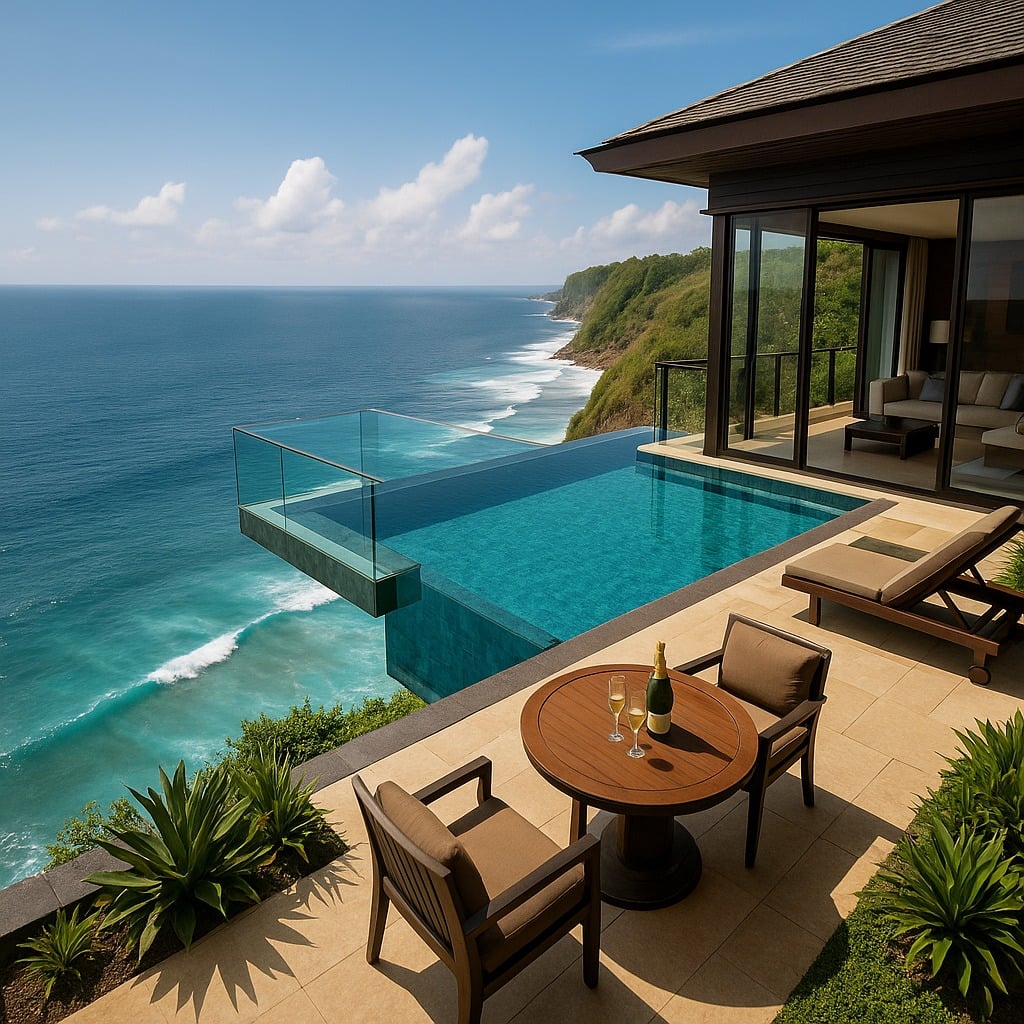
Amanbagh’s villas are conceived as self-contained sanctuaries. Step inside and stone coolness slips over you like silk. Vaulted ceilings open to a living salon, while sliding doors reveal a private garden or shimmering pool edged by bougainvillea. Marble bathtubs are set temple-like beneath domes; four-poster beds are draped in muslin; writing desks invite long letters home. Every detail is thoughtful and tactile—bronze fixtures, hand-loomed textiles, and a palette of desert neutrals that lets the green world outside take center stage.
Rajasthan, Rewilded and Restful
Though the legacy of nearby forts and stepwells is palpable, Amanbagh’s atmosphere is almost pastoral. Wake to birdsong and the rustle of palm fronds; take tea in a shaded pavilion as peacocks cross the lawn. Between spa rituals and poolside reveries, wander the gardens with a naturalist, learning the stories of neem, banyan, and frangipani. Dusk brings a different rhythm—oil lamps flicker, and the sky turns pomegranate over the Aravalli ridges.
A Culinary Journey Through the Land
Dining is a dialogue between Rajasthan’s earthy traditions and Amanbagh’s refined restraint. Breakfast might be flaky parathas with house-churned butter and raw honey; lunch, a thali of heirloom grains and garden vegetables brightened with coriander and lime. At night, a lantern-lit table appears beside the pool or in a hidden courtyard: slow-cooked laal maas, fragrant biryani, and delicate sweets perfumed with cardamom. The team happily designs off-menu experiences—farm suppers under the stars, picnic breakfasts after dawn temple visits—each one intimate, seasonal, and quietly celebratory.
Wellness, Rooted in Ritual
The spa draws on Ayurvedic wisdom reinterpreted with Aman’s clean aesthetic. Begin with an abhyanga massage using warm herbal oils, then a steam infused with eucalyptus and tulsi. Yoga is offered at sunrise on a terraced pavilion; meditation follows, guided by gentle bells and the hum of the garden. For deeper restoration, multiday programs balance doshas with tailored treatments, sattvic menus, and mindful movement—ideal after a whirlwind tour of forts and bazaars.
Sense of Place, Curated with Grace
What elevates Amanbagh is its way of opening doors. Staff can arrange a private visit to a stepwell at dawn, with saffron chai waiting at the edge; a guided walk through nearby villages, where artisans still work on block-printed textiles; or a sunset drive into the hills, returning by lantern light. For the adventurous, excursions to ancient ruins or leopard-spotting safaris are handled with breezy precision. Always, the return to the villa feels like exhaling—cool stone, soft light, and the rustle of palm leaves at your window.
Q&A and Hotel Recommendations
Q: What’s the best time to stay at Amanbagh?
A: October to March offers gentle daytime warmth and cool evenings—perfect for outdoor dining and explorations. April and May are hotter but quieter, ideal if you prefer seclusion and long, languid spa days.
Q: Is Amanbagh suitable for families or couples?
A: Absolutely. Couples love the privacy of pool villas and candlelit dinners; families appreciate spacious gardens, tailored excursions, and the team’s instinctive care for multigenerational travel.
Q: What signature experiences shouldn’t I miss?
A: A sunrise temple visit followed by a garden breakfast; an Ayurvedic consultation and oil therapy at the spa; and an alfresco thali dinner under a canopy of stars. If time allows, add a guided visit to a stepwell or a leopard-watching drive in the nearby hills.
Q: How do I pair Amanbagh with other compelling stays in Rajasthan?
A: Consider a circuit that contrasts rural calm with palatial drama. Recommended pairings include:
• Aman-i-Khas, Ranthambhore – for tented-camp romance and tiger safaris.
• RAAS Devigarh, Udaipur – a restored 18th-century fort-palace with contemporary design flair.
• Six Senses Fort Barwara – heritage splendor with a wellness focus.
• The Oberoi Udaivilas – lakeside opulence on the banks of Lake Pichola.
Each complements Amanbagh’s tranquility with a different facet of Rajasthan’s rich tapestry.
Q: What should I pack?
A: Lightweight natural fabrics, a shawl for cool evenings, modest attire for temple visits, and comfortable footwear. A wide-brim hat and sunglasses are essentials; a journal is recommended—you’ll want to write things down.
Conclusion
“Boutique elegance” at Amanbagh is not about ostentation; it’s about refinement you feel more than see—the measured cadence of service, the harmony of stone and garden, the sense that time is stretching softly around you. Stay here and Rajasthan becomes intimate: sunrise prayers in a rose-lit temple, supper beneath jacaranda boughs, and a villa that holds you in hushed luxury. The exclusive experience is not merely the privacy of your pool or the perfection of your dinner—it’s the rare privilege of inhabiting beauty, quietly and completely, in a place that seems to breathe with the land itself.